
Students spend years building technical knowledge, completing assignments, and preparing for graduation. Yet many still graduate with one unanswered question: what does the world I am preparing for actually look like?
Not the job title. Not the course description. The workplace itself. How decisions happen, how teams collaborate, what leadership looks like, and where they fit within it.
Universities are asking an important question too: how do we prepare our students for a world they have not yet experienced?
Why OBEF industry collaboration matters
This challenge is exactly what the UAE Ministry of Higher Education’s Outcomes-Based Evaluation Framework (OBEF) seeks to address. OBEF signals an important shift in higher education: from measuring the opportunities institutions provide to understanding the outcomes those opportunities generate (Ministry of Higher Education and Scientific Research).
With Industry Collaboration accounting for 20% of the framework, the question is no longer simply whether universities engage employers, but how effectively those partnerships contribute to student development, employability, and meaningful career opportunities.
In that framework, industry collaboration must evolve from occasional exposure to structured, sustained, and measurable engagement.
Industry collaboration in action: Fem in STEM
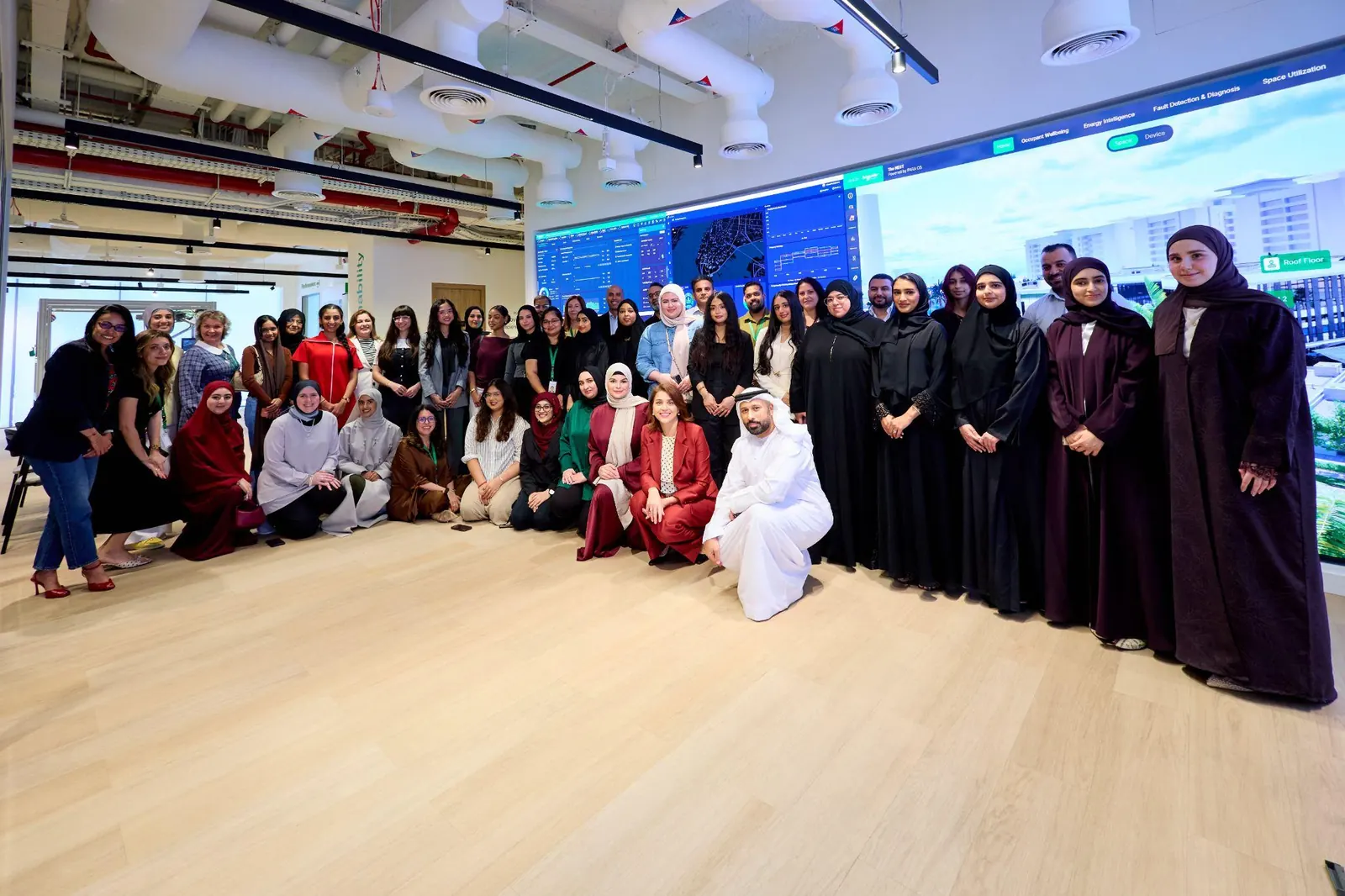
Fem in STEM is a mentorship program delivered by Impactiv in partnership with Schneider Electric. The program deepens industry engagement by expanding its collaboration across five university partners: Khalifa University, American University of Sharjah (AUS), Rochester Institute of Technology (RIT) Dubai, Abu Dhabi Polytechnic, and Higher Colleges of Technology, creating a shared ecosystem connecting academia and industry.
The experience extended beyond one-to-one mentorship. Students engaged directly with Schneider Electric professionals through networking opportunities, leadership discussions, workplace visits, and exposure experiences. This translated into:
- 100 mentors and mentees engaged across 50 mentoring connections;
- 10+ Schneider Electric functions and industry backgrounds represented;
- 21+ networking and industry engagement opportunities throughout the journey;
- 4 workplace exposure experiences, including events, group learning sessions, and visits to Schneider Electric’s Innovation Hub, where students explored firsthand how sustainability, technology, and innovation come together in practice;
- and 14+ Schneider Electric leaders, speakers, and industry professionals introduced to mentees beyond one-to-one connections, creating broader access to diverse perspectives, networks, and career opportunities.
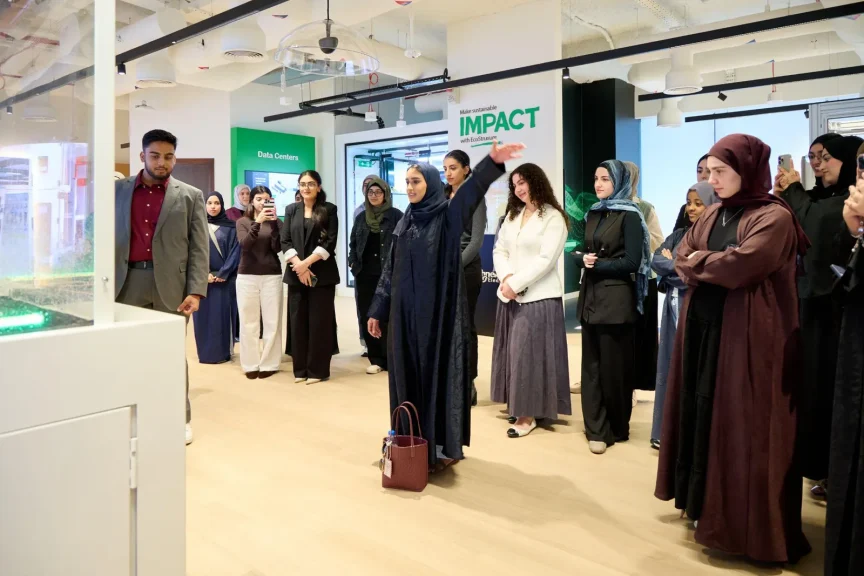
“Visiting Schneider Electric’s office during my mentorship was a turning point in how I see the future of infrastructure.”
Mentee, Cohort 2
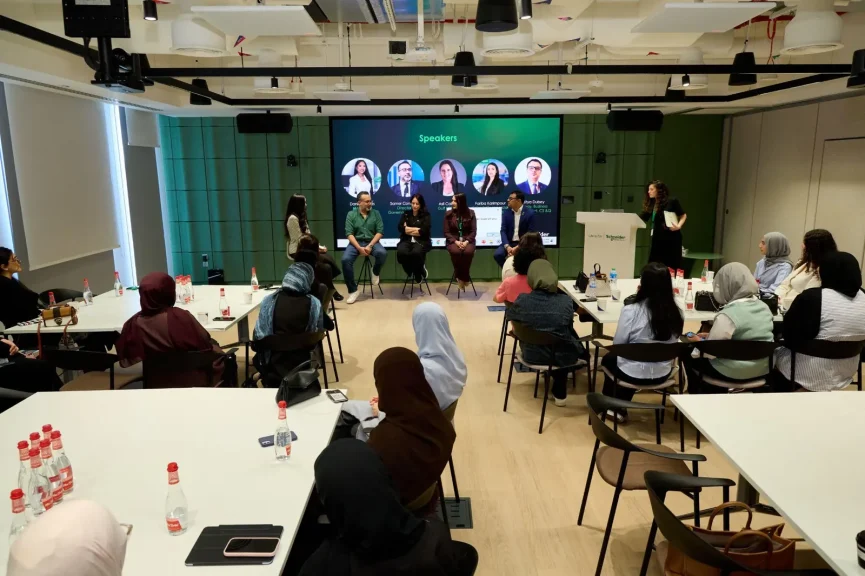
The program also intentionally created meaningful connections and conversations. Sessions like Shaping Early Career Paths: Influence, Impact, and Early Decisions gave students direct access to authentic reflections on career growth, uncertainty, and early decisions.
“The panel discussion at Schneider Electric was an eye opener to how quickly the world is evolving, reinforcing the importance of adaptability and embracing change.”
Mentee, Cohort 2
The outcomes: confidence, connections, and career clarity
The outcomes extended beyond exposure itself:
Rethinking university–industry partnerships in the UAE
As UAE universities translate OBEF into institutional priorities, the opportunity is to rethink what meaningful industry collaboration looks like.
Are we creating occasional opportunities for students to meet employers, or sustained experiences that help them develop the confidence, capabilities, professional networks, and career clarity needed to transition into employment?
The difference lies not simply in the number of partnerships established, but in the quality of the experiences designed and the outcomes they generate.
At Impactiv, our experience reinforces a simple belief: the strongest university–industry partnerships do more than introduce students to the world of work. They help students develop the confidence, connections, and capabilities to participate in it.
Explore More from Impactiv
This is the second article in our OBEF in Practice series. Read part 1 on how structured mentorship supports OBEF employment outcomes, learn more about the Fem in STEM mentorship program, or talk to us about an industry collaboration for your university.