
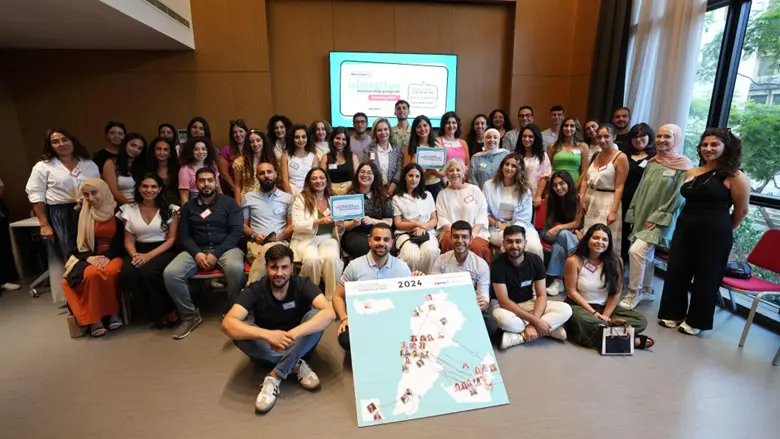
Ever wondered about the meaning of “alumni”? You’re definitely an alumnus of somewhere; I know I am, of many places, but I have never actually stopped to wonder what the word meant. Turns out it comes from Latin, and it means “to nourish,” “to feed,” or “to bring up.”
I think that is beautiful.
To identify as an alumnus of a place, I think you have to feel a real sense of belonging and engagement to it.
That sense of belonging comes from the memories we shared with the people around us, within the very few walls of that specific place. That place must have challenged us and definitely nourished us; it helped us grow in some way or form.
Belonging Is Wired Into the Brain
Let me back up my claim scientifically, and away from the romantics: our brains are wired for social connection the same way they are wired for food and shelter; it’s essential for survival. Two areas of our brain are reserved for it: the anterior cingulate cortex and the ventral striatum, and they reinforce our feelings of inclusion whenever we experience acceptance.
Oxytocin, our bonding hormone, is released when we feel connected and comfortable in a social group. Engagement also works our dopamine pathways, which enhance motivation, learning, and creativity, which is probably why so many of us learned so much about ourselves and our capabilities at uni.
I’m not turning this into a neuroscience lesson. I just want you to understand that identifying as an alumnus of somewhere goes deep into your brain. It’s a really deep concept.
The Place I Spent Far Less Time In
To take a step back, this sense of belonging usually gets tied back to universities and schools; places we spent years of our lives in. But that is not what I am writing about today. I’m writing about a place I spent far less time in, yet feel just as deeply connected to and engaged with. A place that nourished me and helped me grow, in ways I’m still discovering.
That place is the Intersection Mentorship Program by Impactiv and INJAZ Lebanon.
What the Intersection Alumni Council Proves
And if belonging and engagement really are what it takes to identify as an alum of a place, then the Intersection Alumni Council is proof that I meant every word of what I said earlier. You don’t belong to a council for somewhere you just passed through.
Think about it. Seven of us, from different cohorts, who never overlapped, who don’t share the same memories or inside jokes or moments in time, somehow found our way back to Intersection, because something about that place is still nourishing us long after we left it. That is belonging doing exactly what it is wired to do. Remember the anterior cingulate cortex, the ventral striatum, the oxytocin? None of that switches off the day a cohort ends. We didn’t really leave Intersection behind; some parts of our brains just kept the door open, waiting for a reason to walk back through it.
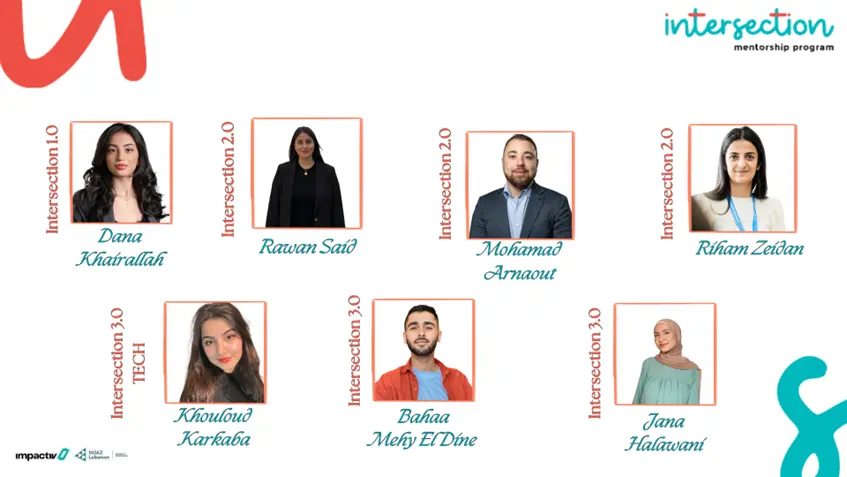
And engagement is the part that turned that pull into action. Feeling connected to a place is one thing; feeling motivated enough to organize around it, to build something for it that outlives your own cohort, is another. That is the dopamine at work again, the same drive that had us learning and growing while we were still in the program, except now it’s pointed outward. We are not just experiencing Intersection anymore; we are actively engaging with it, showing up for it, giving to it.
So really, joining the council was not so much a decision as it was belonging and engagement, doing exactly what they do. Pulling seven people from different points along Intersection’s timeline back into the same room, for the same reason, to work on one goal.
That thing, practically speaking, is a council with a purpose.
A Council With a Purpose
We want to extend the program’s impact beyond the time any of us actually spent in it, so the nourishment doesn’t stop the moment a cohort ends. We want to foster alumni engagement, to keep the walls we once belonged to open and warm for everyone who has already left them, because belonging should not come with an expiry date. And we want to support the continuous growth of mentorship, because if Intersection gave us anything, it is the reminder that someone, somewhere, believed in us first, and we owe that same belief to whoever comes next.
Underneath all of it, though, is something much simpler. We want to give back.
Through organizing tea talks to share from our experience and skills with the current mentees, to contributing to alumni engagement efforts and strategic growth for the next cohort, we are making sure that the community that once started in 2022 with 15 mentee-mentor pairs keeps on intersecting and growing from the 150+ connections that we have today; from the people to the people who share the value of giving back to the community.
I would like to end this with a line I keep coming back to: “I belong, therefore, I give” (Drenzer & Pizmony-Levy, 2020). I think that is exactly it. That is this whole article, really, condensed into six words. I belong to Intersection. So, I give.
Explore More from Impactiv
The Intersection Alumni Council is one strand of how Impactiv designs structured mentorship programs that keep people connected long after a cohort ends. Alongside INJAZ Lebanon, the Intersection Mentorship Program has grown from a single cohort of pairs into a community that now sustains itself through its own alumni. If Rawan’s account of belonging and engagement resonates, the pages below show what that looks like in practice across our programmes, our measured impact, and the resources we publish for mentors and mentees.
Learn more about the current Intersection programme.