

Under the United Arab Emirates’ (UAE) Outcomes-Based Evaluation Framework (OBEF), Employment Outcomes represent one of the key pillars in evaluating higher education institutions.
The pillar carries a 25% weighting and looks at whether graduates secure full-time employment or pursue further education within one year of graduation, as well as whether employed graduates are working in roles relevant to their field of study (Ministry of Higher Education and Scientific Research).
Why OBEF employment outcomes matter for universities
For universities, this brings employability into sharper focus. Career fairs, CV workshops, and final-year advising remain valuable, but they are only part of the picture. Students also benefit from earlier exposure to career pathways, workplace expectations, employer perspectives, alumni guidance, confidence-building, and professional networks.
This is where Impactiv’s work connects closely to the OBEF Employment Outcomes pillar.
We design and deliver structured mentorship programs that help bridge the gap between academia and industry. Through purposeful mentoring journeys, guided connections, measurable engagement, and experiential learning opportunities, our programs support students, graduates, and early-career talent as they prepare for the transition from education into work.
What this looks like in practice: Ershaad program
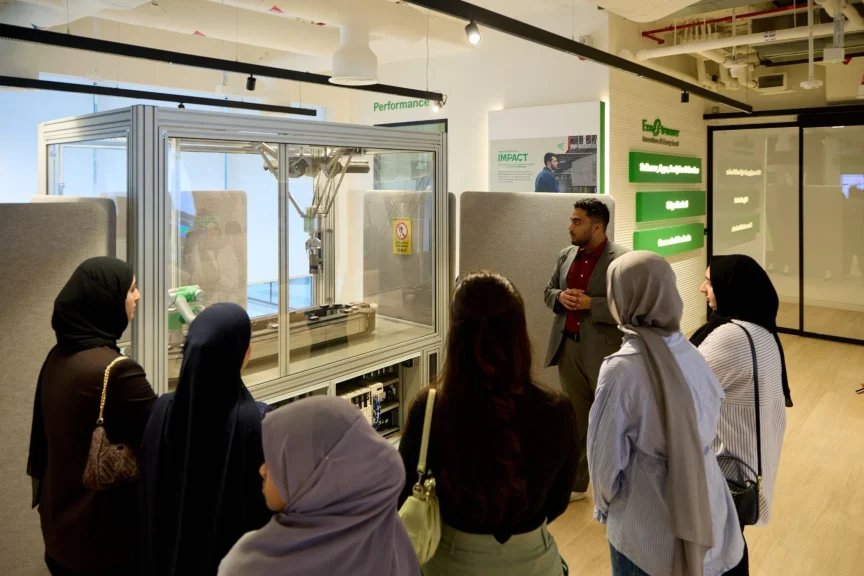
One of the clearest examples is Ershaad, delivered in partnership with Emirates Global Aluminium (EGA). The program is designed to support Emirati female third and fourth year university students in Science, Technology, Engineering, and Maths (STEM) and business fields through one-to-one mentoring, industry exposure, interactive workshops, networking spaces, and personalized career guidance.
The program focuses on the transfer of technical, interpersonal, and soft skills; building industry connections; providing career guidance; enhancing access to practical learning; and contributing to a stronger national talent pipeline.
Six months after the mentorship journey, Impactiv surveyed Ershaad Cohort 1 mentees (24 in total) to understand their progression. Among respondents to the employment status question, 14 were employed, 1 was enrolled in internships, 4 were seeking jobs, and 3 were still students.
While employment outcomes are influenced by many factors, this post-program snapshot provides a useful indication of how mentees were progressing after completing the program. It also shows the relevance of maintaining support beyond the formal mentoring journey, particularly as students move closer to employment, internships, or continued education.
Career readiness: what mentees said they gained
The same survey showed strong growth across employability-related areas. Across the key growth indicators, 21 out of 24 respondents agreed that Ershaad helped them develop in areas linked to career readiness, including:
- Career direction, helping mentees gain more clarity about where they want to go;
- Confidence in professional settings, supporting how they present themselves in interviews, workplaces, and networking environments;
- Communication and networking skills, helping them build relationships and engage more effectively with professionals;
- Understanding workplace expectations, supporting the transition from university into professional environments;
- Receiving and applying feedback, which is essential for early-career growth;
- Setting professional goals, encouraging greater ownership of their career journey;
- and building relationships with industry professionals, giving students access to guidance, visibility, and real-world insight.
These are not employment outcomes on their own, but they are important employability signals. They reflect the kind of development that can influence how students explore opportunities, make career decisions, engage with employers, and transition into relevant professional pathways.
A longer-term investment in employability
The skills, networks, mindset, and perspective students gain throughout the program are not limited to their first job after graduation. They become a longer-term investment in their professional growth, employability, and ability to navigate future career opportunities with greater confidence and clarity.
Through Impactiv’s structured mentorship model, career readiness becomes more intentional and measurable. Students are supported through professional connections, guided reflection, workplace exposure, and goal-setting, while universities gain clearer evidence of how students are preparing for employment or further education.

Explore More from Impactiv
This is the first article in our OBEF in Practice series on how structured mentorship supports OBEF employment outcomes and the wider framework. Continue with part 2 on OBEF industry collaboration. Learn more about the Ershaad mentorship program, see how we approach mentorship program design in the UAE, or talk to us about a program for your university.